By Jolanta Smulski and Matt Aldrich, co-founders of the Pet Industry Network
An industry can be resilient while individual businesses have a hard year. A pet business can have loyal customers and still struggle to bring in new ones, fill its calendar without improving its margins, or invest in marketing without knowing which part is working. In 2026, we heard versions of these problems from pet retailers, service providers, and brands.
The pet industry has opportunities to grow, but that doesn't tell an individual pet business owner what to do next. Across Global Pet Expo, the PIN Growth Summit, and SUPERZOO, three needs kept coming into focus:
Clarity: Pet business owners want to know what's working, what deserves investment, and what will bring in customers. We'll focus PIN education on decisions people can actually make.
Respect for limited resources: Time and money are already spoken for, and a wrong move can be expensive. We'll talk honestly about trade-offs and what to prioritize.
Relevant expertise: A pet retailer, boarding facility, and product brand face different problems. We'll connect them with PIN Experts who know their part of the industry.
From ideas at Global to decisions at the Growth Summit
We began the trade show year at Global Pet Expo. PIN Experts taught on the education stages, we organized a booth tour, and Astro Loyalty and Pet Engine Marketing joined us for a March Madness pop-up. It was our first reminder of a pattern that surfaced all year: pet businesses can find ideas and potential partners easily; deciding which ones deserve their resources is harder.
That need became much clearer at the PIN Growth Summit. We had 211 registrations, 88% of registrants checked in live, and 156 people joined the roundtables. The turnout mattered to us, but so did what people chose to spend their time on: profitability, technology, and strategic growth drew sustained interest in the sessions and replays.

PIN Growth Summit 2026 Attendees
Pet business owners came with questions about marketing, operations, finance, staffing, and growth. Those questions often came down to a choice: Should I spend more to find new customers or work on keeping the ones I have? Is the problem my marketing, my margins, or the amount of work that still depends on me? What can I afford to change first?
There wasn't one answer for everyone, and that was part of the lesson. A brand trying to earn retail distribution needs a different kind of help than a boarding facility trying to make its schedule and staffing work. The Summit's live roundtables made space for pet business owners to bring their own circumstances into the conversation with specialists who understood them.
As one participant in the follow-up Momentum Program put it, “sometimes I feel like I’m just winging it, so having that validation from experts was huge.”
We left with a clearer standard for PIN education. A session that leaves a pet business owner with ten possibilities and no way to choose hasn't solved their problem. Attendees responded to expert-led teaching, but the live conversations and direct access to specialists gave them a way to test an idea against their own circumstances. We want to make more room for that kind of exchange throughout the year, beyond a two-day Summit.
At SUPERZOO, we asked why results differ
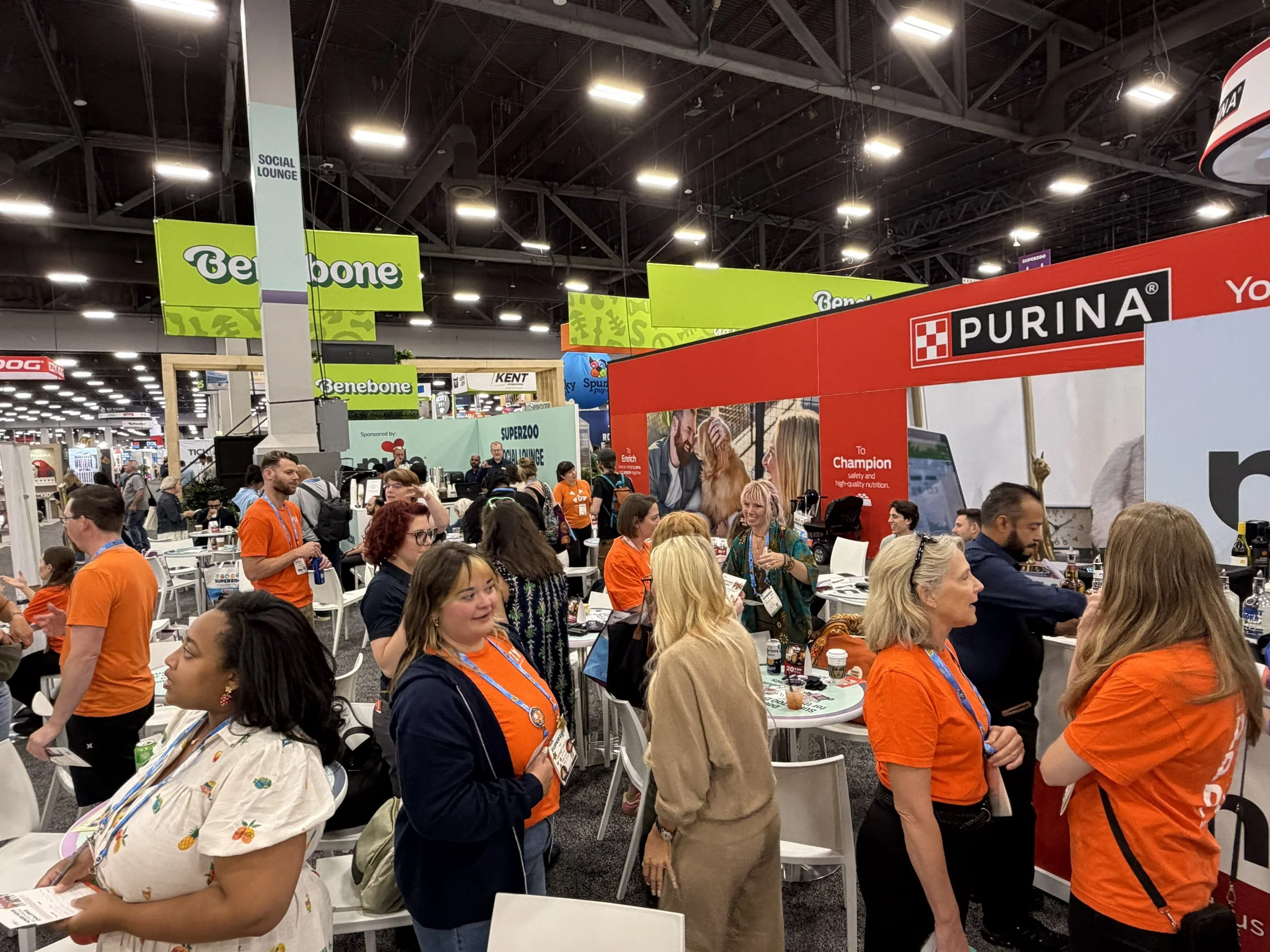
The PIN Power Hour at SUPERZOO 2026.
At SUPERZOO, we asked what separates activity from results. Matt Aldrich of Pet Engine Marketing joined Eve Molzhon of Dog Handler Academy and Michelle Huie of ShopDot Pet for a panel on why pet businesses facing similar pressures can get very different results. The questions on the table were concrete: What do more selective pet parents value? How do they discover and trust a business? When does being known for solving a clear problem give customers a reason to choose you? Jolanta Smulski of Pet Pro Media joined Stephen Gary of Accelerazon to examine how a pet brand becomes trusted, found, and chosen in a panel moderated by Claire Obertin of Cleveland Research.
Our strongest takeaway from the week was that marketing activity isn't the same as business performance. A pet business can post more often, send more emails, and try another platform without fixing the reason customers aren't buying or returning. Before adding a tactic, it helps to know where people drop off and which result needs to change.
More than 100 pet industry professionals joined us for the PIN Power Hour. We watched a lot of those conversations happen there, and it was one of our favorite parts of the show. The Power Hour captured something we'd been working toward all year: PIN bringing pet business owners and industry specialists together around the questions they were trying to answer.
What we'll take into 2027
We'll keep making room for those questions, in our events and in what PIN Experts share throughout the year. Lynn Switanowski wrote about finding profit leaks in a pet business. Cait Mellor explained where a strategic copywriter fits on a pet brand's team, while Eve explored revenue opportunities already within reach of a pet care facility. Those articles address different businesses, but each gives its reader a way to examine a specific decision.
For us, the test of a useful PIN resource is whether a pet business owner can see how it applies to their customers, their numbers, and the time they have to put into it. Thank you to everyone who brought a question, shared their expertise, or helped someone else make a better decision with us in 2026. That's the work we want PIN to keep doing.
If you're working through a specific challenge, meet the PIN Experts and find someone who knows that part of the pet industry.