What We Took Away From SUPERZOO 2026
By Thursday afternoon in Las Vegas, our phones were full of photos, our notes were scattered across several places, and there were already more follow-up conversations than we knew we would get to in the first week home.
That is pretty normal for SUPERZOO.
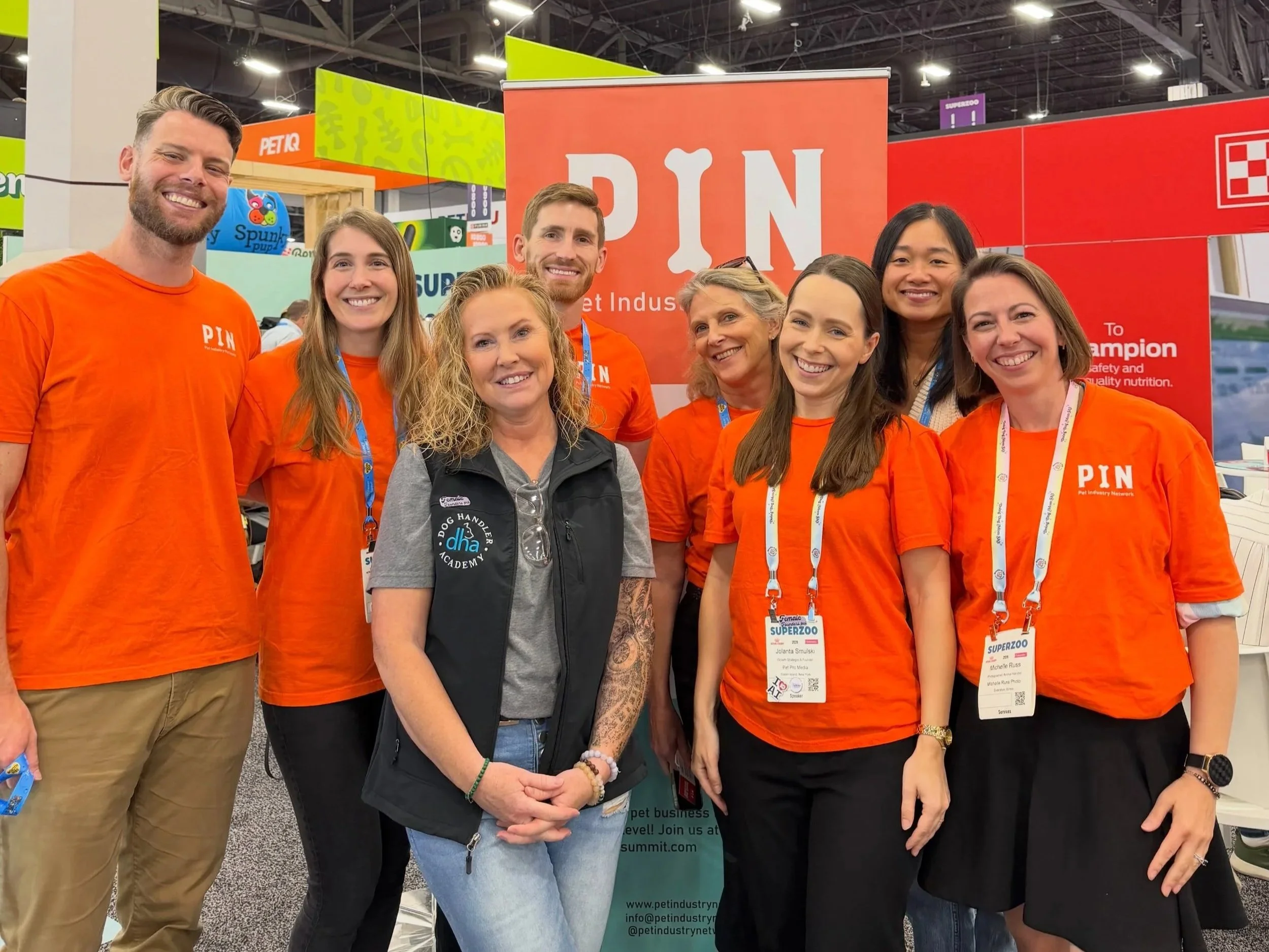
PIN had a full week this year. Members from Pet Engine Marketing, Pet Pro Media, Pet Retail Helper, Pet Boss Nation, ShopDot Pet, Accelerazon, and Dog Handler Academy taught sessions or joined panels throughout the education program. We hosted two PIN-led panels, brought everyone together for our Power Hour, and spent plenty of time talking with retailers, service providers, manufacturers, technology companies, and other people working across the pet industry.
Once we got home and had some time to sort through everything, several themes kept resurfacing.
Slower growth is forcing businesses to get sharper
There was no shortage of optimism at SUPERZOO, but the conversations felt grounded in the realities of the current market.
Growth has slowed in parts of the pet industry. Customers have more options, operating costs are higher, and pet parents are being more selective with their spending. Businesses that could once rely on category growth or customer loyalty to provide some momentum are having to work harder for it.
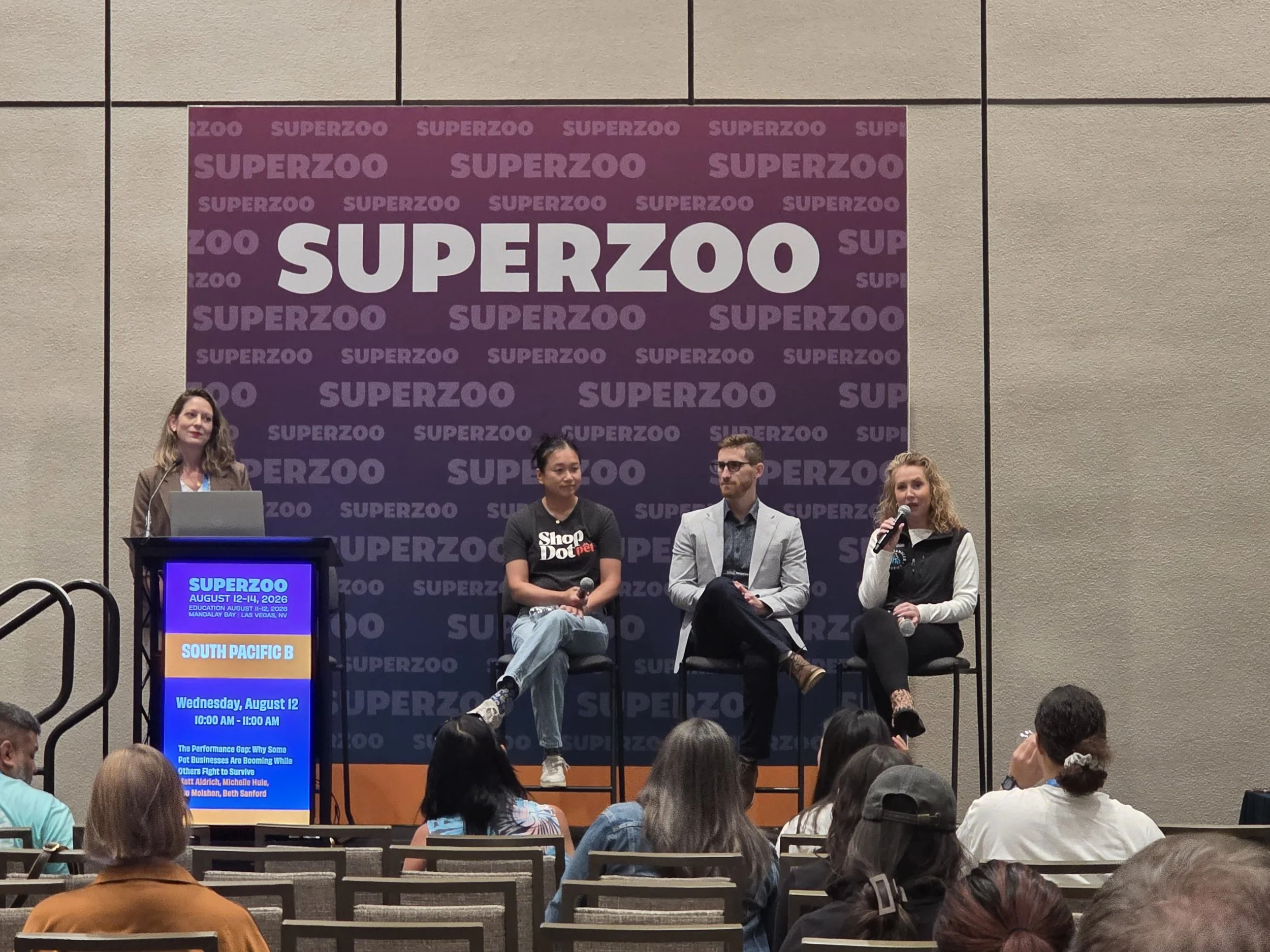
That subject was central to our Performance Gap panel with Matt Aldrich, Eve Molzhon, and Michelle Huie, moderated by Beth Sanford of Whisker Park.
We spent a lot of time discussing why two businesses can operate in the same economy, serve similar customers, and face many of the same pressures while producing completely different results.
The businesses doing well weren't all using the same tactic. What they tended to have in common was a better understanding of what their customers value, clear goals, good people with ownership over important parts of the business, and a willingness to look at the numbers and change course when something wasn't working.
One line from the panel sums up a lot of our thinking: marketing activity is not business performance.
A business can post constantly, send emails every week, run ads, attend events, and stay extremely busy without solving the problems holding back growth. We see that distinction becoming more important as the market gets more competitive.
There is still plenty of room to grow. It is becoming harder to coast into it.
The businesses that were easiest to remember were the most specific
SUPERZOO gives you a very quick lesson in how difficult it is to stand out.
There are thousands of products on the show floor. Retailers are surrounded by brands asking for their attention. Service businesses compete with companies offering similar services. Consultants, speakers, technology providers, and other industry experts have a few minutes to explain why somebody should remember them after a week filled with introductions.
The companies and people that stuck with us usually had a clear answer.
We talked during the week about the idea that your niche is the problem you have become very good at solving.
A dog trainer who is exceptionally good at one difficult problem has a reason for someone to seek them out. A retailer known for solving a particular need gives customers a reason to drive past another store. An industry expert who deeply understands one type of pet business can become far more useful to that group than someone trying to serve everyone.
You could see the same principle on the show floor. "High quality" does not provide much differentiation when nearly every booth can make the same claim. The brands that were easier to understand could explain who the product was for, why that customer needed it, and what made it worth remembering among the other options nearby.
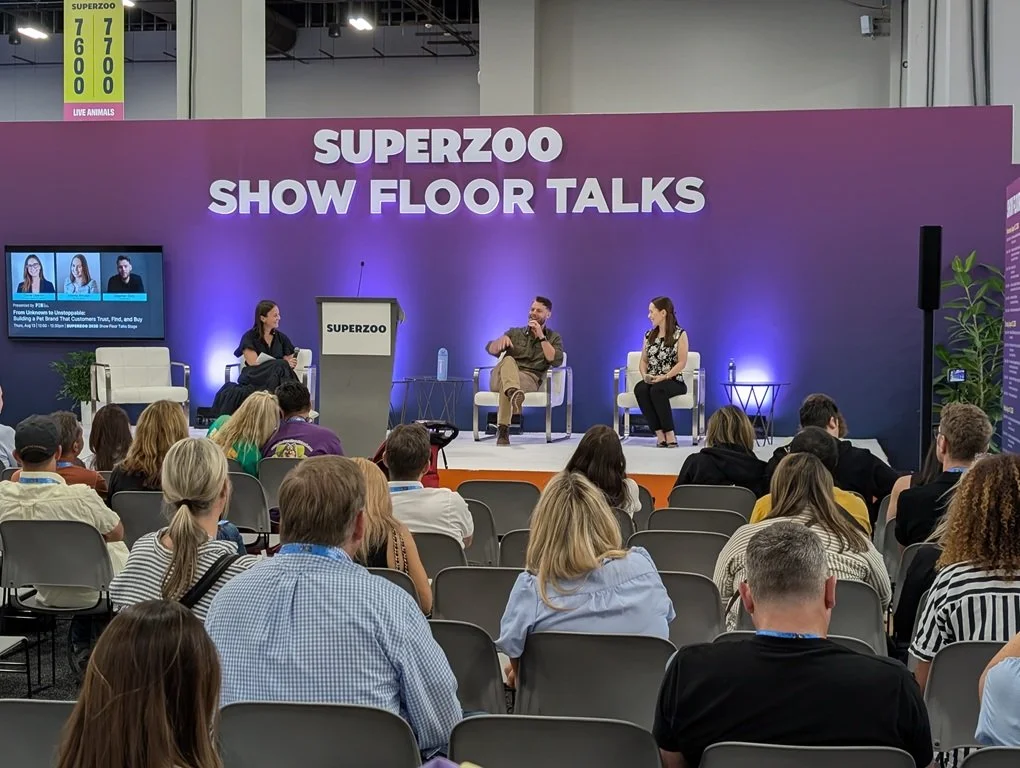
This also came through during our From Unknown to Unstoppable panel with Jolanta Smulski and Stephen Gary, moderated by Claire Obertin of Cleveland Research Company. Discovery, trust, search visibility, Amazon, customer retention, and brand positioning all connect. Weakness in one part of that journey can make the others work much harder.
Specificity helps people understand where you fit. At a show the size of SUPERZOO, the value of being easy to understand becomes obvious very quickly.
AI has already moved into the customer journey
AI was impossible to avoid at SUPERZOO this year, although the conversations have become much more practical than they were a year or two ago.
People wanted to know how customers are using it, how AI search affects discovery, where it belongs inside a business, and which applications are worth spending time on.
That shift matters. AI is becoming part of how consumers research products, compare options, ask questions, and decide which companies deserve a closer look. At the same time, businesses are trying to figure out where AI can save time or improve the work happening behind the scenes.
We think experimentation is still the right approach. A retailer, boarding facility, pet brand, consultant, and marketing company will all find value in different places. There is little benefit in adopting a tool because everyone else is talking about it.
The search side deserves particular attention. AI systems build answers from information they can find and interpret across the web. Reviews, useful website content, third-party mentions, accurate business information, and a clearly defined area of expertise all contribute to the picture those systems can build about a company.
Many of the fundamentals we have talked about for years still have a role. The places where customers search are expanding.
Power Hour was one of our favorite parts of the week
There is a lot of education available at SUPERZOO, and there are more products than anyone could reasonably see in a few days. Some of the most valuable moments still happen in conversations that were never on the official schedule.
That was the reason we wanted to host the PIN Power Hour.
We kept it simple. Drinks were on PIN, Astro Loyalty provided the prizes, and people had an hour to meet others from around the industry without sitting through another presentation.
Watching retailers meet experts, service providers talk with potential partners, and people finally meet someone they had previously known only online was one of the highlights of the show for us.
Those relationships matter because different parts of the pet industry can become pretty isolated from one another. Retailers have one set of challenges, service providers have another, and brands are often looking at the industry from a completely different angle. Getting those people into the same conversation gives everyone a better sense of what is happening outside their own corner of the market.
That is a big part of what we want PIN to keep creating.
The useful part starts once everyone gets home
SUPERZOO produces a lot of input in a very short period of time.
There are business cards to go through, screenshots you took because you wanted to remember something, notes from education sessions, products you want to investigate, people you promised to email, and ideas that sounded brilliant somewhere around the second day in Vegas.
Then everybody goes home and gets busy again.
One of the ideas we kept coming back to after the show was one move before Q4.
We like that a lot more than coming home with a list of 25 things that probably will not happen.
Maybe your move is following up with a potential partner. Maybe there is something on your website you have known for months needs to be fixed. You might test an AI tool on a repetitive process, dig into a number in your business you have been ignoring, or get much clearer about the customer or problem you want to be known for serving.
The specific move matters less than doing something with what you learned.
SUPERZOO gives the industry a few days to get outside the normal routine and see what other people are building, testing, struggling with, and getting right. A month later, most of us are back inside our businesses dealing with the next problem in front of us. The ideas worth keeping are the ones that survive that transition.
We came home encouraged by what we saw. The pet industry has real challenges, and businesses are having to earn growth more deliberately. We also met a lot of smart people adapting to those changes, trying new things, sharing what they know, and finding opportunities in a market that continues to evolve.
Thank you to everyone who joined us for the PIN Power Hour, attended one of our PIN-led panels, supported PIN members throughout the SUPERZOO education program, or stopped us somewhere in the chaos of the show to talk shop.
We hope you made it home with at least one idea worth putting to work.